
System Choice Based on Consumption Data
We decide between on-grid, off-grid or hybrid not with a fixed-package mindset, but by reading the consumption curve, outage expectations and available roof area together.
Compare the system designsA residential solar system is a solar solution where electricity generated on the home's roof is matched against household consumption, and designed around the grid, a battery, or both, based on need. This service suits homes with suitable roof space that want to plan their consumption profile around their own usage patterns.
The core technical decision is which of on-grid, off-grid or hybrid systems to choose, based on the intensity of daytime consumption, the need for backup during an outage, available roof surface and grid access.
During the site survey and design phase, roof layout, shading, meter setup and the targeted usage scenario are all evaluated together to determine the best-fit system backbone for the home.
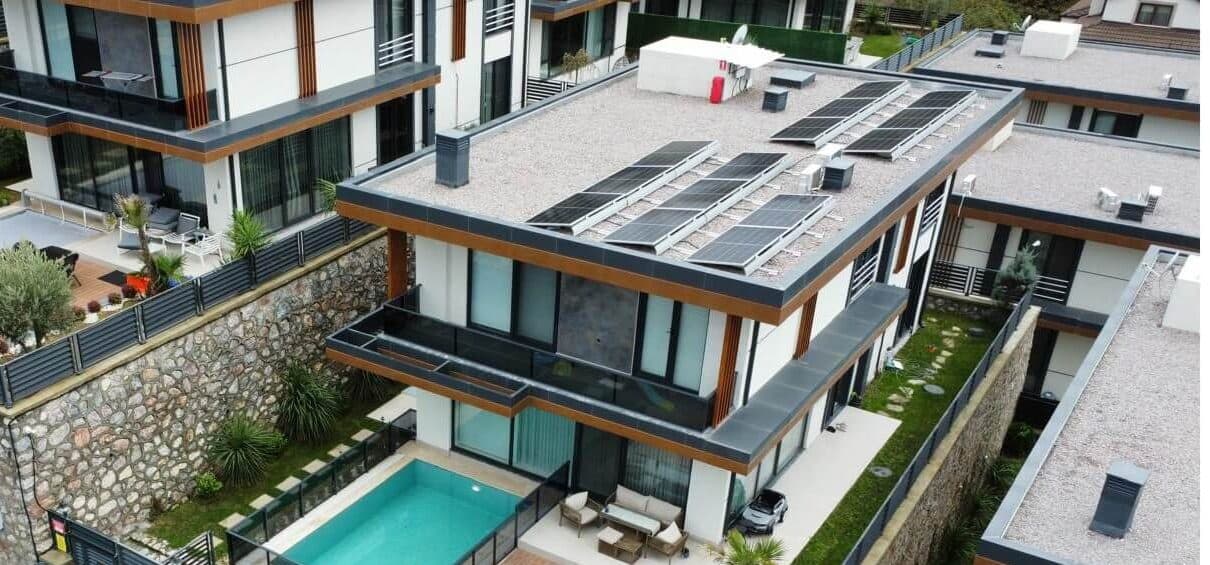
Every home's location and energy consumption habits are different. We choose the system that best fits you, together.
The base design for homes with grid access, matching daytime production against real-time consumption. How any surplus energy is handled is evaluated under the current regulatory model.
See the detailed system pageFull independence for country houses, highland cabins, or anywhere the grid doesn't reach. Uninterrupted power with strong battery solutions.
See the detailed system pageA design that combines grid connection with battery backup in the same system. Which loads are backed up during an outage is determined through technical planning.
See the detailed system pageHow about getting your electric car's “fuel” from the sky? We integrate the solar systems we install with smart EV chargers.
By charging your car directly with clean energy from the sun, we bring your transportation costs down to zero — an eco-friendly and economical solution.
For residential projects, system choice, application readiness and implementation scope aren't decided with one-line promises — they're determined by evaluating consumption structure, roof suitability and technical process steps together.
We decide between on-grid, off-grid or hybrid not with a fixed-package mindset, but by reading the consumption curve, outage expectations and available roof area together.
Compare the system designsFor residential projects, the technical file, meter setup and application flow are planned around the project type and the requirements in effect on the application date.
See our process approachWe back our quality, environmental and workplace safety processes with visible certification — we don't leave the trust signal to generic corporate language alone.
View our certificatesA system design that helps reduce grid draw based on your consumption profile
Readiness for current application and incentive processes
Professional installation planning
A long-term equipment investment
Low maintenance cost
Clean, environmentally friendly energy
Increases your home's value
Payback period assessed with real project data
Turnkey residential solar installation with our professional team
Our expert team visits your home, inspects your roof and analyzes your energy consumption.
A system design tailored to you is prepared; the investment assessment is built by considering consumption data, roof conditions and equipment choice together.
The application and approval steps are planned around the project type and the requirements in effect on the application date, and the required paperwork is managed within that framework.
Site installation is planned around roof structure, equipment procurement and implementation scope. The installation timeline is finalized once technical preparation is complete.
System tests are run, usage training is provided, and energy production begins.
The scope of maintenance and support is set based on the installed system's monitoring needs and operating plan. Required checks are handled within a periodic maintenance discipline.
This section was prepared to directly answer the service description, eligibility conditions and key technical decision points.
The required area depends on the targeted system power, panel size and roof layout. A proper area calculation only becomes clear once usable roof surface, shading and consumption goals are examined together.
Site installation itself can be completed quickly for most residential projects, but the total timeline depends on the site survey, project preparation, equipment procurement and approval steps. The main factor shaping the schedule is how quickly technical preparation and the official process are completed.
On standard on-grid systems, production stops during an outage as a safety measure. If certain loads need to keep running during an outage, that need must be planned separately within a hybrid system design.
How nighttime usage is covered depends on the system type you choose. In grid-connected setups, nighttime consumption is typically drawn from the grid, while in systems with storage, a portion of the energy produced during the day can be kept in the battery.
The system type is chosen based on roof conditions, how consumption is distributed through the day, and outage expectations. If working with the grid is enough, on-grid is the choice; if energy storage or backup is needed, a hybrid or off-grid scenario is evaluated.
Get in touch now for a free site survey and a detailed price quote